

marine life
Hanifaru Bay Rules, Fees and How to Visit: A Local Guide from Dharavandhoo
June 15, 2026
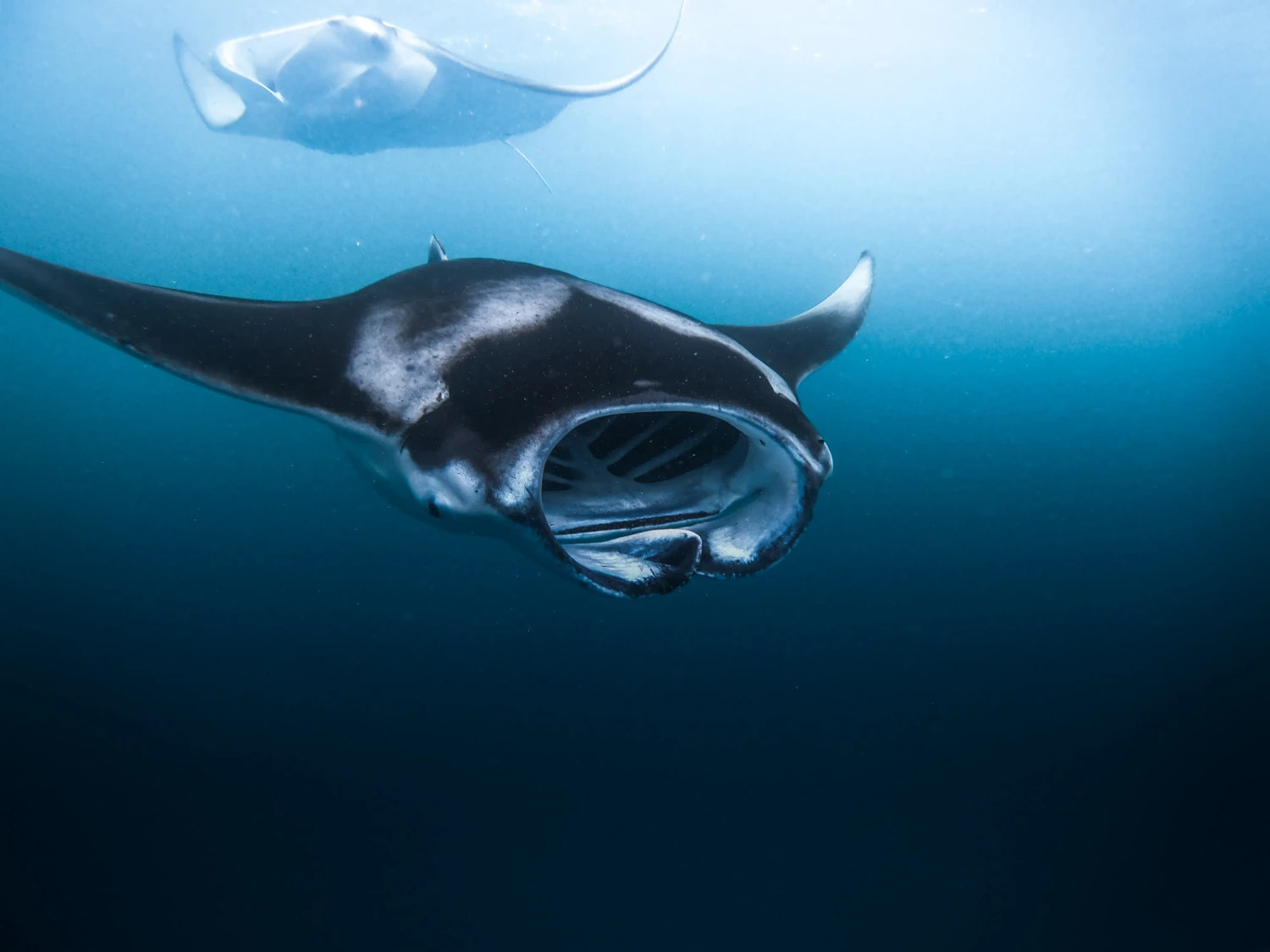
Hanifaru Bay is a tiny pocket of reef on the eastern edge of Baa Atoll, no bigger than a couple of football pitches - and yet it's one of the greatest marine spectacles on Earth. When the conditions align, hundreds of reef manta rays, and sometimes whale sharks, pour into this single small bay to feed on dense clouds of plankton. Violet Inn sits on Dharavandhoo, one of the closest inhabited islands to the bay, which makes it one of the best-placed bases in the country for visiting.
The reason the spectacle still happens is that Hanifaru is fiercely protected. It was declared a Marine Protected Area on 8 June 2009 under the Maldives Environment Protection and Preservation Act (Law No. 4/93), and it became a core zone of the Baa Atoll UNESCO Biosphere Reserve when the atoll was designated in 2011. Access is governed by a dedicated rule - the Hanifaru Protection and Preservation Regulation (No. 23-R/2012) - and managed on the water by the Baa Atoll Biosphere Reserve Office and its rangers.
What do you need to visit? From a visitor's point of view it's simple: to enter Hanifaru Bay you must have a valid entry permit and be accompanied by a licensed Hanifaru guide in the water. Both are mandatory - but you don't arrange either yourself. Your guesthouse or tour operator obtains the permit in advance, provides the licensed guide, and bills it all as part of your trip, so there's nothing to organise or pay separately at the bay. The permit fee supports the Baa Atoll Conservation Fund; there's no single fixed rate and the figures published online date quickly, so it's best to ask your operator for the current price. At Violet Inn, the licensed guide and your entry permit are already included in our Hanifaru trip price - one simple price, sorted before you go.
The rules in the water are strict, and they exist to protect the feeding mantas. Hanifaru Bay is snorkelling only - scuba diving has been banned inside the bay since 2012, because bubbles and depth disturb the animals. There's no fishing and no anchoring, and you must never touch, chase, or ride a manta or whale shark. Keep a respectful distance, never block an animal's path, and let it come to you - which, more often than not, it will.
Access is also capped to keep the bay from being overwhelmed. No more than five boats and around 80 people may be in the water at any one time, and each group is limited to roughly 45 minutes in the water, typically once a day. Boats rotate through, often shuttling across from Dharavandhoo, so a calm, well-timed trip with a local guide beats fighting for space at the busiest moment.
When should you come? Hanifaru's season runs with the southwest monsoon, from about May to November, with the strongest activity between June and October and the very best window usually from late July to early October. Even then, the mantas follow the plankton, the currents, and the pull of the full and new moon rather than any timetable - so no honest operator can promise a sighting on a given day. What a good local guide can do is watch the conditions and the ranger reports and put you on the water when the bay is most likely to fire.
That's the real advantage of basing yourself on Dharavandhoo. From Violet Inn it's a short hop to Hanifaru, our trips run with licensed local guides who know the rules and read the bay daily, and we sort the permit and the timing for you. Follow the code, trust your guide, and you'll witness one of the ocean's greatest shows - and leave it exactly as you found it.